Showing posts with label Books. Show all posts

Saturday, April 17, 2010

A Story for Earth Day

In a previous post about children's books, A book is a gift you open again and again, I wrote about my quest of finding good children's picture books. Recently, one of our teachers pointed me towards a book which has become my absolute favourite.

The Tin Forest, by Helen Ward is a story about an old man's persistent dreams which transform a garbage dump into a forest full of life.

“There was once a wide, windswept place, near nowhere and close to forgotten ...” And in the middle of this wasteland lives an old man in a small house. "Every day he tried to clear away the garbage, sifting and sorting, burning and burying. And every night the old man dreamed." Every night he dreams of a real tropical forest.

The Tin Forest

One day he has an idea and goes to work on it. From the garbage he builds a forest. He uses tin, metal, glass and other scraps to build trees, and animals and flowers. Then one day a bird visits one of the trees. The old man feeds the bird some crumbs. He makes a wish and the bird returns, this time with a mate and seeds. As time passes from the earth sprout shoots and soon there are insects, and other living creatures.

“There was once a forest, near nowhere and close to forgotten .... And in the middle of this forest lived “an old man who never stopped dreaming.”

The Tin Forest is a wonderful book for all ages, with beautiful stunning artwork and prose. It is an empowering story about the power of dreaming and hard work, about not giving up and believing in the future. There is also a strong environmental message in the story, which can initiate discussions about rubbish disposal, recycling, and reusing. Our world may sometimes look like a dump, however, with a change in attitude we can make it a better place to live!
"He made a forest because he doesn't want a whole place of garbage. Because that is soooo boring." - D, 4 yrs
The Tin Forest is magical. A true gem! An inspiring story for Earth Day!

- Anja

image source: Salisbury International Art Festival

Friday, July 10, 2009

A book is a gift you open again and again

We are in the middle of two weeks of school holidays, and it is Winter downunder. It has been wet and cold, and the days are short. A good time to share a good book with your child. In Mary Quattlebaum’s recent post at the Green Hour Blog, readers share their favourite outdoor children’s books. Head over to Green-Read Hour for some suggestions. Not all books mentioned may be available in New Zealand, but fishpond does have a good collection.

My favourite outdoor children’s book is Cactus Hotel by Brenda Guiberson, illustrated by Margaret Lloyd. As a Montessori preschool we prefer non-fantasy books for our children, fiction and non-fiction. Non-fantasy fiction books are hard to find. Many of the usual young children’s books available are about animals who talk, dress up and act like humans. To find a fiction book for young children not based on fantasy, but real life experiences, is a mission.

Photobucket

Cactus Hotel is a beautiful book about the saguaro cactus and the complex web of life in the Sonohoran Desert in Arizona. This book is a gem. The illustrations are beautiful, the text is simple and lyrical. And the story is real. The book introduces the young child to the natural cycle of life and ecosystems and how much plants and animals depend upon one another for their survival. I am not sure if the book is available in New Zealand as it was gifted to us by Kieran, an American Sistercity exchange student from Arizona who stayed with our family last year. A beautiful gift we will open and open, again and again!

At our preschool, our children are encouraged to read whenever they want, and where ever they want. Books are readily available. The children not only use books for pleasure, but also as a source of knowledge. We teach our three and four years old children how to use an insect guide or bird guide, and they are very good at it.

As teachers we read to our children daily. In Summer we often read outside, our peacepole deck is a great place for this. Even in Winter we may read to them outside, as children don't feel the cold like we, adults, do. Our older children, who are starting to read independently, are encouraged to take a mat outside and read in a calm, quiet spot, to each other, or with each other. Outside is a great place for a good book!

Photobucket"Happy is he who has laid up in his youth, and held fast in all fortune,a genuine and passionate love of reading." - Rufus Choate

Books are a great gift, reading is unique to humans. You can read anywhere and anytime. The world of books is unlimited. Your child is never too young to share a book, you are never too old to read a book, to your child, with your child, or alongside your child. What books have you been reading with your child lately?
- Anja

Wednesday, May 6, 2009

Going Green part 1 - Recycling

As a member of Enviroschools, the New Zealand counterpart of Eco Schools, our preschool is committed to work towards becoming a sustainable community. Being an Enviroschool means we are committed to creating a sustainable physical environment that fosters greater understanding of the interrelatedness between all living things and a concern for the particular place we live in. It promotes and acknowledges our preschool's long-term action for the environment. We start environmental education at a young age with hands-0n experiences.

As an Enviroschool we raise our childrens' awareness of environmental issues through talking, sharing and doing. Young children learn what they are taught and it is important to teach them basic skills that will influence and shape habits. Habits, such as recycling, are then reinforced over their entire lives.

To recycle means to collect and remake an item into the same thing or into something else. The recycle symbol means that something can be recycled or that it has been made from recycled material. In order for something to be recycled, however, it needs to be saved and taken to a place called "recycling centre".


Recycle 02
Recycle 01

At our preschool, we collect our recyclable items in separate bins. Once they are full, the children put everything in bags, which can be tricky when your are only three years old! The bags are then put back in the recycling bin and taken to the kerbside, to be collected by the recyclers. The "trip" to the roadside letterbox, to put the recycle bin at the kerbside for collection, is a major highlight, as the children feel very responsible carrying out the lot.

Waste reduction and recycling is part of being a green school and our children are totally involved, as it is integrated into our curriculum and part of our whole school environment. Not only does recycling teach our children eco literacy, environmental awareness and social responsibility, it also teaches skills in classification, matching, sorting, sequencing and critical thinking.

Recycle 03

Teaching young children about recycling doesn't have to be elaborate or complicated. Keeping it simple is key to making it successful. Young children easily learn to distinguish between glass, plastic and paper, the three main properties we separate from our garbage to be collected by the recycling people.

A good children's book to share with your child about recycling is "George Saves the World by Lunchtime" by Jo Readman and Ley Honor Roberts.


It is a story about a boy who is determined to save the world, but is not quite sure how. A trip to the recycling bank, charity shop and local farmers’ market show how recycling and re-using materials, and using less petrol and local produce can really help save the world.

At home you can take recycling a step further by talking to your child about waste reduction. You can teach your child about the use of trees to make paper products and looking at all the packaging in the supermarket when you are grocery shopping together. You may even want to start your own vegetable garden, pointing out to your child how you are saving trees by not having to buy the packaged products in the supermarket.

Children love to be involved and to be active and the feeling of helping out nurtures their self esteem and worthiness. Recycling is one action that teaches young children responsibility and respect for planet Earth. But remember, you are your child's greatest role-model!
- Anja

- Going Green part 1 - Recycling
- Going Green part 2 - An enviro care code
- Going Green part 3 - An edible garden

Wednesday, April 1, 2009

Getting down and dirty

Active children, are more likely to grow into active teenagers, according to the Dunedin Multidisciplinary Health and Development Study (Otago University), which has been following 1000 Dunedin-born people since their birth in 1972 and 1973. Keeping children and teenagers physically active is important for their overall health and development. Children who climb trees and fences, play on swings and in paddling pools, ride bikes and play ball games stay more physical active during their teenage years, the Otago University study suggests.

We already know that children and young people are becoming increasingly disconnected from nature, with opportunities for children to play free range diminishing. There is a growing body of evidence that nature is important for children's health. Spending unstructured time playing in natural places, the neighbourhood or the backyard positively develops children's bodies and minds. Scientists are also finding that playing in the dirt, with its friendly bacteria, can boost the immune system as well as help to increase the brain’s “happiness” chemical, serotonin.

Unfortunately, children don't just go out into nature or the neighbourhood the way they used to, and just digging in the dirt is foreign for many children.

In her book "I love dirt!", Jennifer Ward presents 52 activities for parents and teachers to help to engage their child in the natural outdoor world of their own neighbourhood or backyard.


Richard Louv, author of "Last Child in the Woods" (see post here) writes the foreword in "I love dirt", in which he refers to his great-grandparents' days when most people spent the better part of their lives outdoors, ".. when it came to fun, that was outside". Louv writes about his own childhood family outings and the stories he passed along to his own two boys when they were small, stories he called "turtle tales". Children today are becoming increasingly removed from nature, and "turtle tales" are less and less passed down, as are the opportunities to gather "turtle tales".

"I love dirt!" gives a collection of outdoor activities for adults to do with young children. Included are simple outings, games and activities, involving bugs, leaves, trees,even snowmen and many more wonderful items of nature. "I love dirt" is divided up into the seasons that children and adults can observe and admire, as each season has something beautiful and different about them. It is a simple book, that will appeal to parents and teachers who find it a challenge to step outside and share in with their child's natural curiosity of the beautiful world in their own backyard or neighbourhood.

PhotobucketAt our preschool, we don't talk about dirt, but about soil. Our soil is beautiful, not "dirty". "Dirt is our earth. It helps us to live", says Esmee (read here).

Family picnics, fishing trips, cloud watching, stargazing, mud pie baking, these are must do activities for every young child. "I love dirt" describes many opportunities to get down and dirty. Keeping children active and involved in the natural world may, according to the above Otago University Study, give them a headstart for staying active when older, growing healthier minds and bodies.

Sunday, November 30, 2008

The wonderful world of insects

Bucket
Our preschool catches the rainwater from our roof and stores it in a small watertank. This water is used by the children for gardening. There is a bucket underneath the tap, usually filled with water.

Beetles Insect book

One morning we discover several bugs floating in the water. Closer examination reveals that they are still alive. Without any hesitation, one of our children starts fishing the little bugs out of the water. Soon he has several of them crawling over his hand and arm. He places them in the garden under the bushes. Next, of course, we want to know what they are. We know they are beetles, but we are not sure what kind of beetle, so out comes the book. It isn't hard for the children as they are becoming more skilled in looking up birds and insects in our reference books. In this case we use the book "Which New Zealand Insect?" by Andrew Crowe, and the children identify the beetle as the "grass grub beetle" which emerges from the ground during this time of the year.

Every child is born with a natural curiosity for animals and many children are fascinated with our tiny crawlers - the insects. They have an eye for little creatures, flying or going from flower to flower, crawling on leaves and sometimes even in our food as well. Unfortunately, along the way to adulthood, this curiosity and admiration often extinguishes. Not so, if the child has an adult who appreciates and encourages their interest in insects. At our preschool, there isn't a day passing by or we haven't stopped and admired an insect or anthropod (spider) that crosses our path, like the two bumble bees carrying a wasp.

The wasp must have been a bit heavy for the bees as they "stumbled" through the air and landed on a stump. They then flew of, leaving a dead wasp behind. I still wonder what the bumble bees were up to. Bees
Learning about insects is a wonderful way to teach children about nature. Entomology, or the study of insects, is a very interesting subject to teach. You absolutely do not have to be an avid bug enthusiast or entomologist yourself, just have a genuine appreciation for insects, shouldn't we all have that?


Did you know? Some 350,000 beetle species have been named worldwide, making them the largest group of insects. About half of the world’s 160 or so beetle families occur in New Zealand. Until the 1990s it was thought that New Zealand beetles were an ancient lineage, and had become isolated when New Zealand split and drifted away from the Gondwana supercontinent, around 85 million years ago. Others had arrived by dispersing across the ocean, or had been introduced through human activities. But research now suggests that New Zealand was largely submerged around 35 million years ago, and many plants and animals have arrived since then. Source: Te Ara, the Encyclopedia of New Zealand


Saturday, November 29, 2008

We're going on a bear hunt


Our garden is growing fast, especially the grass at the back, which hasn't been mowed all year. It is tall and wavy and reminds me of the classic children's story "We're going on a bear hunt" by Michael Rosen and Helen Oxenbury.

Remember the swishy swashy, long wavy grass? For those who don't know the story, it is about a family who goes on a bear hunt. They set off, with confidence, "We're not scared". The hunt takes them through tall grass, a deep river, a dark forest, a snowstorm and thick mud, into a cave where they meet the bear and, of course, they are as scared as anything and retrace their steps. Watch this YouTube video with Michael Rosen performing the story.


This week we went on "a bear hunt". With gumboots on our feet and sunhats on our head we head out into the garden. As I read page by page we make our way through the long wavy grass, a deep cold river, thick oozy mud, a big dark forest and a swirling whirling snowstorm. "We can't go over it. We can't go under it. Oh-no! We've got to go through it!" What a fun way to "read" a story.

Grass
"Long wavy grass"

Mud
"Thick oozy mud"

Forest
"A big dark forest"

Grass 2
"Back through the grass! Swishy swashy! Swishy swashy!"

Anybody surprised the children asked to go on "a bear hunt" again the following day?

Friday, November 14, 2008

A garden walk, feeding mind, heart and body

Meditation

We have had some glorious days this week. Although officially still spring, the last couple of days have been like summer, hot and sunny. Our garden is calling out to us and on these hot days we move our mats and pillows to the peace pole deck.

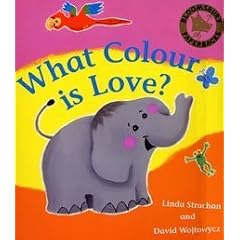
The peace pole deck is mostly shaded from the hot sun and a nice place to come together. We listen to a story, "What colour is love?", by Linda Strachan and David Wojtowycz.

"What colour is love?" is a beautiful story exploring the different colours, finishing with the conclusion that the colour of love is every colour, everything, everywhere, all around, "because nothing else matters when it's love that you've found". A wonderful book to share with young children. It sets the tone for the rest of our afternoon.

Exploring

After listening to the story we seem to all have this need to spend more time in our peaceful garden. We decide to take a walk, through our own garden. We discover there are lots of things to explore and investigate. What is hiding under the rocks? What we can find when we move the logs? Is there anything living under the tussock grass bushes? How many weta are visiting the weta hotel? What is the name of this clingy weed? How does this acorn seedling get here? There is so much to see, feel, smell, hear and even taste, although we don't pursue the latter.

We see "enormous" worms and"hundreds" of slaters. We identify buttercups and bedstraw and even find some bulbs (yes, people used to eat those during the winter of 1945 in Word War II, that started a discussion in itself). We blow the white stars of a dandelion and make a wish.
Grass We count two weta in the hotel. We look at the different pine cones, their shape, size and texture. We find acorns, some have sprouted. We see a spider carrying its eggs, and we find a spider nest in the bushes. We stroll through the kneehigh grass, hmm, that would be a fun place for playing hide and seek.

As we maneuver our way through our wild garden, we have to balance over logs, climb over rocks and walk over unleveled varied surface, unlike a smooth concrete patch. The physical challenge to keep our balance requires gross motorskills, while handling magnifying glasses to inspect spider eggs and using tweezers to dislodge seeds from the pinecones requires fine hand/eye coordination.
It is hot and we sit down for a rest. Roger, our rabbit, joins us and we pat his soft fur. Some of us lay down and watch the clouds.
Rabbit


Young children create their own perceptions of the world and think in concrete terms, with their body, their mind and their heart. They learn about everything, all the time, and they do it full steam ahead. For them to learn effectively and joyfully, they must be engaged. During their first few years, they absorb with their senses. For knowledge and skills to really stick in their brain, it must go through their body and their heart. Their social and emotional life is filled with constant challenges as they are navigating their way through social relationships and its rules. They are learning to recognise, accept and express their own feelings as well as the feelings of others. They need time and space to do so.

Snail

Our nature walk, through our own garden, brings us together as a group, sharing our curiosity, enthusiasm and excitement. It is a wonderful way to foster relationships with each other and the creatures we share this planet with and to nurture self-motivation, self-discipline and not to forget curiosity, something that so many children lose along the way to adulthood.

Sunday, October 12, 2008

A garden grows more then just plants, it grows people

A new book: Outdoor classrooms, a handbook for school gardens

It is Sunday morning, and I am writing this post in Taupo. I am sitting outside our rented bach, overlooking a reserve. The sun is making its way up the horizon, the sky looks promising blue and the lake is glistering in the distance.
Thrush All I can hear on this beautiful calm Sunday morning is the song of the thrush in the tree next to me, some other birds across the valley, a bumble bee visiting the clover buds in the grass and some flies buzzing around.

How long this will last I don't know, but people will soon arise, cars will get started, lawns will get mowed, boats will get launched and the birds will get quiet. I am enjoying this moment to the full while it lasts. Kinloch

Yesterday I visited the Ecoshow. My favourite stand during a show or exhibition is usually the bookstand and this is no different at the Ecoshow. The stand had several books available with the main focus on organics, permaculture and transition towns, but my eyes quickly caught the pile of books at the back of the table that looked brand new. Indeed, "Outdoor classrooms, a handbook for school gardens" is hot of the press from Australia. It is written by Carolyn Nuttall and Janet Millington, two primary school teachers and permaculturists with over 60 years of teaching experience between them, many of which have been in garden-based learning.

The book explores the benefits of school gardens and their value in nurturing children's relationships with the natural world. It gives plenty of ideas, plans and designs for developing and maintaining a school garden and suggestions on how to get started. What is clear from the beginning is that this is not a book about the traditional school gardens as we find them at schools across the country, the forgotten little patches in the back corner of a playground. Instead, this is a book about developing and maintaining a permaculture or sustainable garden as a formal part of an outdoor classroom and a living curriculum. This is where the book has my attention, with its extensive list of "outdoor learning adventures". This collection of ideas and concepts will add to our own ideas, which we have applied in our own preschool garden. Our preschool garden is an essential part of our classroom and is the main component of our living curriculum, see my post "Our beautiful garden, a magical place". You can also read more about our garden and our outdoor naturalised environment on our preschool website. Another valuable part of the book is the section about curriculum connections. Although Australian based, the information can easily be applied to the New Zealand environment and the workshops and units can easily be adapted to your own situation and environment.

Garden

The book is illustrated with sketches and drawings, and a handful of black and white photographs. Some full colour photos would have enhanced the book. I haven't finished reading the whole book, but it already has given me new ideas I can't wait to apply some of them in our garden. I can recommend the book to any teacher who'd like to embark on the journey of setting up a school garden as part of a living outdoor curriculum or for those who'd like some fresh ideas and inspiration to take their school garden to the next level. Together with our own book, "Our journey as an enviro preschool", the two books will be a great resource and put you on the pathway of setting up a sustainable garden as part of a naturalised outdoor school environment.

Sunday, September 28, 2008

Birdwatching with young children

Daylight savings started today. Spring is here, downunder. This is the time of the year I wake up at around 5.30am to a chorus of birds, singing in our otherwise quiet suburb, only to be all silent again at around 6 am. Sometimes I get up and have a dip in our spa pool, watching with anticipation the sky above to see if is going to be a blue and sunny day or not, at the same time enjoying the crispy air and listening to the tui in the neighbour’s tree. Sometimes my six year old daughter joins me, and it is a time we thoroughly enjoy together. This brings me to birdwatching with children.

Today’s life is hectic for our children with school work, afterschool activities and peer pressure. At our preschool, we show the children how to take a deep breath, slow down, and wonder at the beauty of nature. One of the activities we use is introducing them to birdwatching. We have a small park next to our preschool with some bushes bordering to our garden. The birds like this little green dot in our suburb and we regularly have little wax-eyes , yellowhammers and tui visiting the trees. This often happens during our lunchtime, when we are having our lunch with the children up on our deck. The garden will be quiet which makes it a good time for the birds to visit and take advantage of the spilled bird seeds or chicken pellets our pets have left behind.

PondThe blackbirds especially love to have a little splash in our little pond, which we created out of a children’s play water trough.The children and I will try to quietly move a bit closer and watch the birds as they enjoy their splash, their feed or their bath in the sand and dust.
The driftwood logs in our garden provide a great spot for the children to quietly sit and watch.birdwatching

Birdwatching is a great nature activity to do with young children. You can hang a bird feeder just outside the window and show the child how to sit quietly so that the birds won’t be afraid or you can take them outside into your backyard, your local park or to the forest. Young children are very capable of sitting quietly and watching. You don’t need much, except for a birdguide and a pair of binoculars. We use Andrew Crowe’s: A Mini Guide to the Identification of New Zealand's Land Birds, which is excellent for the younger ones as it small with not to many pages and basic with clear pictures. The birdwatching.com website has a good introduction to birdwatching with children. I also came across this article Birdwatching helps children become nature-wise by Karen Stephens.

There is something magic about watching a bird in its natural environment, going about its business. What is magic too, is watching your child making that connection with nature when they sit quietly, and are mesmerized by the awe and wonder that has been awakened.

Watch birds with your children. You'll be giving them a lifetime ticket to the theater of nature. - birdwatching.com

Saturday, September 13, 2008

Book: Last Child in the Woods - Saving our children from nature deficit disorder

Children need nature for their healthy development, - physical, emotional, and spiritual. Exposure to nature develops skills in problem solving, critical thinking, and decision making. Even creativity is stimulated by childhood experiences in nature. Today’s overscheduled children are increasingly “plugged in” to electronic devices and media and unplugged from the fundamental and formative experience of nature in their own neighbourhood. In his book, Last Child in the Woods: Saving our children from nature-deficit disorder, Richard Louv (2005) refers to this nature-child disconnect as “nature deficit disorder”, the effect of withdrawing nature from children’s experiences.

In his book, Louv shares some of his own childhood nature experiences as well as those of some great environmentalists. Louv gathered the thoughts of many parents, teachers, scientists and other parties. What stands out is that many adults of today have had meaningful life shaping experiences in nature when they were a child, while children today are increasingly removed from nature. Louv pleads for a return to an awareness of and appreciation for the natural world. Not only can nature teach kids science and nurture their creativity, he says, nature needs its children: where else will its future stewards come from? Louv directly links the lack of nature in the lives of today’s children to some of the most disturbing childhood trends, such as rises in obesity, ADD and depression. Last Child in the Woods sparked a movement in the US to reconnect children and nature. The book is a must read for teachers, parents, as well as developers and cityplanners. It will get you thinking.

(New Zealand readers, check out fishpond.co.nz for availability here)
Copyright ©2008 - 2012 eyesonnature. All rights reserved